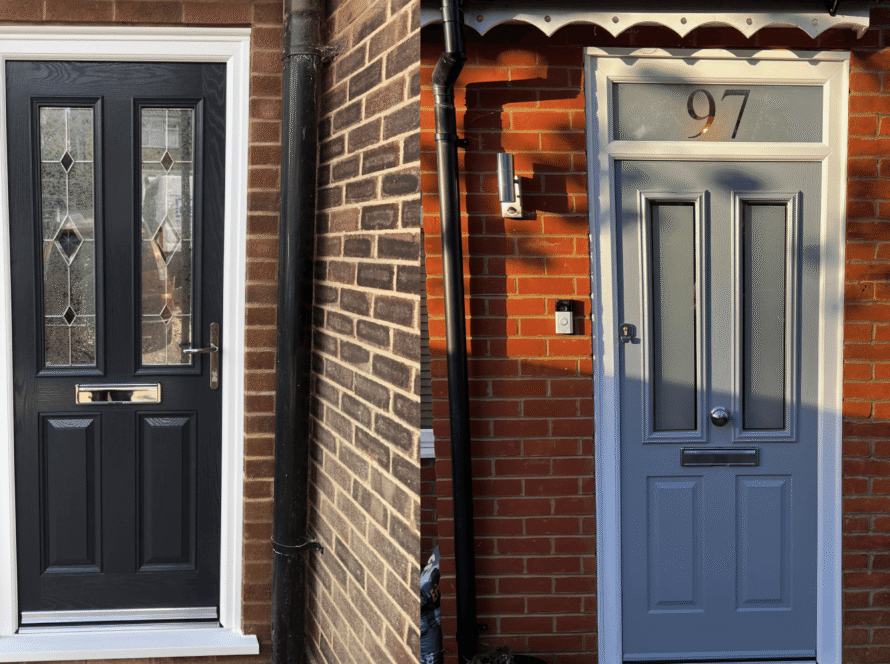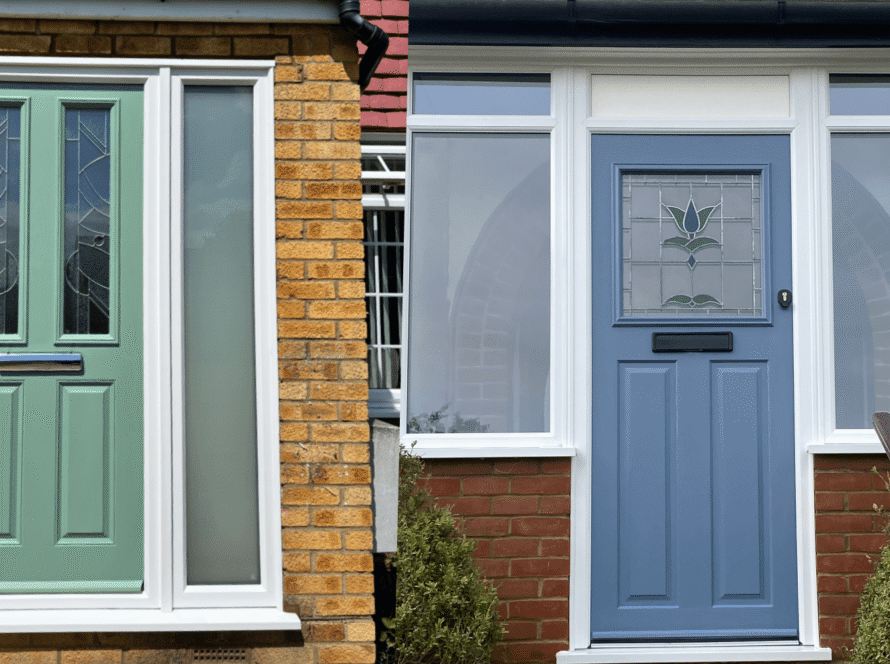
Security is one of the main reasons UK homeowners replace an ageing entrance door with modern composite doors. Older timber doors, poorly insulated uPVC systems, and outdated locking mechanisms often fail to meet modern expectations for protection, thermal efficiency, and compliance. A professionally installed composite entrance door offers a stronger structure, advanced multi-point locking, improved weather resistance, and better long-term performance.
For homeowners, landlords, and developers, the decision is rarely just about appearance. A front door affects insurance considerations, EPC performance, security standards, and overall property value. Modern systems such as Palladio composite door ranges are specifically designed to address these practical concerns while maintaining a high-end appearance suited to both traditional and contemporary UK properties.
This guide explains how modern composite doors improve security, what UK property owners should look for during installation, and the practical realities involved when replacing an entrance door.
What Are Composite Doors?
Composite doors are entrance doors manufactured using multiple materials compressed together to improve strength, insulation, durability, and security performance.
A typical modern composite door includes:
- A reinforced solid core
- Glass-reinforced plastic (GRP) outer skin
- Internal insulation layers
- Steel or aluminium reinforcement
- Multi-point locking systems
- High-security hinges and cylinders
Unlike traditional timber doors, composite systems resist warping, swelling, cracking, and moisture ingress. Compared with standard uPVC doors, they provide significantly greater rigidity and resistance against forced entry.
For UK properties exposed to heavy rainfall, fluctuating temperatures, and coastal conditions, this construction delivers practical long-term benefits rather than purely cosmetic improvements.
Many homeowners searching online for the best composite doors near me are specifically looking for:
- Better burglary resistance
- Reduced draughts
- Lower maintenance requirements
- Improved kerb appeal
- Better energy performance
A professionally installed replacement composite front door addresses all of these areas simultaneously.
How Composite Doors Improve Home Security
Modern composite doors improve security through a combination of material strength, locking technology, frame integrity, and installation precision.
Stronger Door Construction
Traditional timber doors weaken over time due to moisture exposure and seasonal movement. Older uPVC doors can flex under pressure if reinforcement is limited.
Composite systems use dense reinforced cores that are substantially harder to force open. The rigid slab construction reduces flexing around the lock area – one of the most common failure points during attempted break-ins.
This is particularly important in:
- Victorian terraces
- Semi-detached properties
- Ground-floor flats
- Rental properties
- New-build developments with standardised door openings
In real-world installations, older frames are often found to have:
- Loose hinge fixings
- Frame distortion
- Failed locking keeps
- Timber rot around thresholds
- Poor sealing causing movement over time
A full composite front door fitted with a reinforced frame resolves these weaknesses far more effectively than simply replacing locks on an old system.
Multi-Point Locking Systems
Most modern composite doors include:
- Multi-point locks
- Hook bolts
- Deadbolts
- Anti-snap cylinders
- Anti-drill protection
These locking systems secure the door at multiple points along the frame instead of relying on a single central latch.
For UK insurance compliance, installers commonly recommend locks conforming to:
- PAS 24 standards
- BS EN 1303 cylinder standards
- Secured by Design recommendations
Insurance providers increasingly favour doors meeting recognised security benchmarks because they reduce vulnerability to forced entry methods such as lock snapping or levering.
Reinforced Hinges and Frames
Door security is not just about the slab itself. Weak frames remain a common failure point.
Professional installers assess:
- Existing masonry condition
- Frame fixing positions
- Threshold stability
- Structural movement
- Cavity condition
Older properties frequently require frame packers, masonry repairs, or additional reinforcement before installation begins.
This site preparation work is often overlooked in generic home improvement articles but directly affects the long-term security performance of the installation.
Why Palladio Composite Doors Are Popular in the UK
Palladio composite doors have become particularly popular across the UK because of their monocoque construction system.
Unlike standard foam-filled doors, Palladio doors use a reinforced fibreglass structure that provides:
- Higher rigidity
- Improved thermal performance
- Enhanced weather resistance
- Increased impact strength
For exposed UK locations such as coastal areas or elevated rural properties, this additional rigidity helps prevent movement and distortion over time.
From an installation perspective, premium systems also tend to provide:
- Better hinge alignment stability
- Improved sealing compression
- Reduced maintenance callbacks
- More consistent locking operation
This matters for landlords and developers managing multiple properties where reliability and lifecycle costs are important considerations.
Many homeowners also prefer Palladio-style systems because they replicate traditional timber aesthetics while maintaining modern performance standards.
UK Building Regulations and Compliance Considerations
Replacing an external entrance door in the UK involves more than choosing a colour and handle style.
Professional installers must consider compliance with:
- UK Government Building Regulations
- FENSA certification requirements
- Safety glazing regulations
- Thermal efficiency standards
FENSA Certification
FENSA certification provides evidence that replacement doors and windows comply with current Building Regulations.
A compliant installer will:
- Register the installation
- Provide certification
- Ensure thermal compliance
- Confirm safety glazing standards where applicable
This documentation is important for:
- Property sales
- EPC assessments
- Landlord compliance records
- Insurance purposes
Energy Performance and EPC Impact
Modern composite doors contribute to improved thermal efficiency by reducing:
- Air leakage
- Heat transfer
- Draught penetration
Many older entrance doors significantly underperform current thermal standards.
A well-installed composite door can positively support:
- EPC ratings
- Heating efficiency
- Occupant comfort
- Reduced condensation issues
This is particularly relevant for landlords managing rental properties under evolving energy efficiency expectations.
Planning Permission Considerations
Most standard replacement doors do not require planning permission. However, exceptions may apply for:
- Listed buildings
- Conservation areas
- Certain flats or managed developments
Experienced installers typically identify these issues during the survey stage before manufacturing begins.
Real-World Installation Factors UK Homeowners Should Expect
A high-quality door system can still perform poorly if installation standards are weak.
Professional installation involves several practical considerations often ignored in generic online advice.
Survey Accuracy
Accurate surveying is critical because composite doors are manufactured to precise dimensions.
Installers assess:
- Structural opening size
- Plumb levels
- Existing lintels
- Threshold condition
- Brickwork integrity
- Access restrictions
Even small measurement errors can affect:
- Lock alignment
- Weather sealing
- Door compression
- Long-term operation
Installation Timeframes
Most standard composite door installations are completed within one working day. However, additional works may extend this timeframe, including:
- Brickwork repairs
- Threshold reconstruction
- Internal plaster repairs
- Electrical adjustments for alarms or smart locks
Weather delays can also affect external sealing work, particularly during winter installations.
Property Type Challenges
Different UK property styles create different fitting challenges.
| Property Type | Common Installation Issue |
|---|---|
| Victorian terrace | Uneven brick openings |
| 1930s semi | Frame settlement |
| New-build | Tight tolerances |
| Flats | Fire safety considerations |
| Rural cottages | Non-standard openings |
An experienced installer plans for these variables during surveying rather than discovering problems during fitting day.
Composite Doors vs Timber and uPVC Doors
Choosing the right entrance door involves balancing security, maintenance, thermal efficiency, and cost.
| Feature | Composite Doors | Timber Doors | Standard uPVC Doors |
|---|---|---|---|
| Security | Excellent | Good | Moderate |
| Maintenance | Low | High | Low |
| Weather Resistance | Excellent | Moderate | Good |
| Thermal Efficiency | Excellent | Good | Moderate |
| Lifespan | Long | Variable | Moderate |
| Warping Risk | Minimal | Higher | Low |
| Kerb Appeal | Excellent | Excellent | Moderate |
Composite systems generally provide the best balance for most UK residential applications, especially where long-term performance and security are priorities.
Checklist Before Choosing a Replacement Composite Front Door
Before proceeding with installation, UK homeowners should confirm the following:
Security Checklist
- Multi-point locking included
- Anti-snap cylinder fitted
- PAS 24 compliant hardware
- Reinforced frame specification
- Security glazing where applicable
Compliance Checklist
- FENSA registered installer
- Building Regulations compliance
- EPC considerations reviewed
- Safety glazing certification confirmed
Installation Checklist
- Full property survey completed
- Threshold condition inspected
- Frame fixing method explained
- Aftercare guarantee provided
- Waste removal included
This structured approach helps avoid common installation disputes and ensures the door performs correctly long term.
Long-Term Value of Modern Composite Doors
While composite doors usually cost more initially than standard uPVC alternatives, they often provide better long-term value.
Benefits include:
- Reduced maintenance costs
- Improved durability
- Better thermal performance
- Enhanced security
- Increased buyer appeal
For landlords, reduced maintenance visits and improved tenant satisfaction are significant practical advantages.
For homeowners, entrance doors are highly visible property features that influence first impressions and perceived property quality.
A professionally installed modern composite door can therefore support both practical performance and resale value.
Views of composite doors
Modern composite doors improve security through reinforced construction, advanced locking systems, stronger frames, and superior resistance to forced entry compared with older timber or basic uPVC doors.
However, the quality of the installation is just as important as the door itself. Accurate surveying, compliant fitting practices, frame reinforcement, and proper certification all contribute to long-term security and performance.
With more than 30 years of industry experience, Design A View provides professionally installed composite door systems designed for UK property conditions, compliance requirements, and long-term reliability. Whether upgrading a single entrance door or managing a wider refurbishment project, working with an experienced installer helps ensure the system performs as intended for years to come.
Frequently Asked Questions
Yes. Composite doors are generally more secure because they use reinforced solid cores, stronger frames, and advanced multi-point locking systems that resist forced entry more effectively than standard uPVC doors.
In most cases, yes. Replacement entrance doors should comply with UK Building Regulations, and FENSA certification provides evidence of compliant installation.
Most standard installations are completed within one day, although structural repairs, access limitations, or poor weather can extend the timeframe.
Palladio doors are often considered worthwhile due to their reinforced monocoque construction, improved rigidity, enhanced thermal efficiency, and premium appearance.
A modern composite door can contribute positively to EPC performance by improving thermal efficiency and reducing draughts compared with older entrance doors.