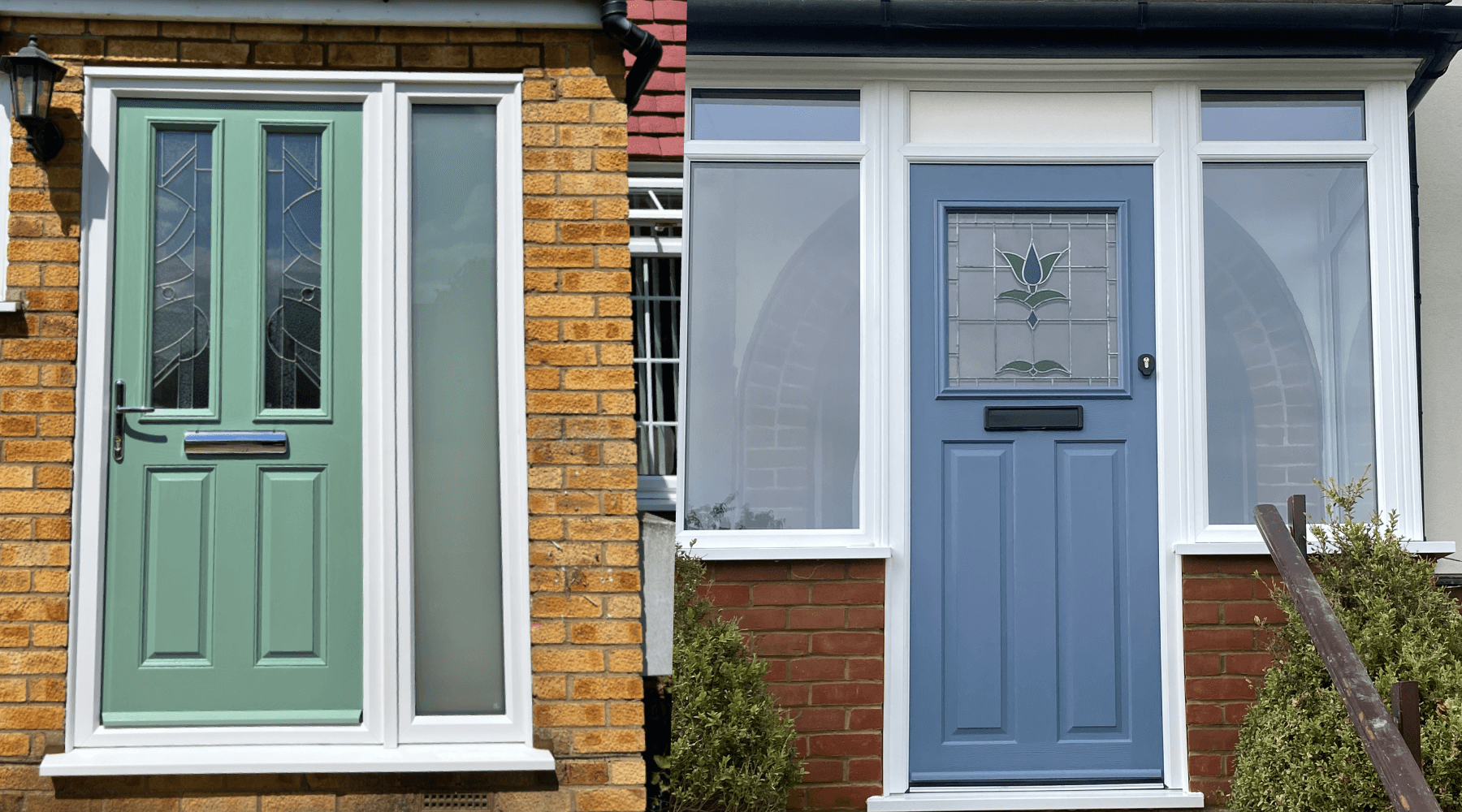
For homeowners and landlords prioritising safety, durability, and compliance, composite doors in Stevenage have become a leading choice. Unlike traditional timber or basic uPVC alternatives, composite front doors are engineered for strength, thermal efficiency, and long-term performance-making them particularly suited to modern UK security expectations.
From my 30+ years of installation experience across Hertfordshire properties, I’ve seen a clear shift: families are no longer just replacing doors for aesthetics-they’re investing in security-led upgrades that align with insurance requirements, Building Regulations, and day-to-day practicality.
What Makes Composite Doors More Secure?
A composite door is constructed from multiple materials-typically a solid timber or high-density foam core, reinforced with glass-reinforced plastic (GRP) and durable outer layers. This layered build significantly improves resistance against forced entry.
In practical terms:
- The solid core resists impact and drilling far better than hollow uPVC panels
- Multi-point locking systems secure the door at several points along the frame
- Reinforced frames reduce the risk of warping or leverage attacks
- High-security cylinders (often anti-snap, anti-drill, anti-bump) are standard
For families in Stevenage, particularly in semi-detached and terraced housing where front access is directly onto public streets, this added layer of protection is critical.
Real-World Installation Scenario
A recent project involved a 1980s semi-detached home near central Stevenage. The existing timber door had:
- Visible frame movement
- A worn single locking point
- Poor sealing leading to draughts
Challenges during installation:
- Slight structural settling required frame adjustment
- Tight hallway access limited fitting manoeuvrability
- Weather delays extended fitting by half a day
Solution:
We installed a grey composite door with a steel-reinforced frame and PAS 24-certified locking system.
Outcome:
- Noticeable improvement in security and insulation
- Reduced outside noise
- Immediate EPC uplift due to improved thermal performance
This is a common upgrade path for UK properties built between the 1970s-1990s.
Compliance and Certification: What You Must Know
When installing composite front doors in Stevenage, security isn’t just about materials-it’s also about compliance.
Key UK Standards
- FENSA certification ensures installation meets Building Regulations
- UK Government Building Regulations Part Q covers security in new dwellings
- PAS 24 accreditation confirms resistance to common burglary methods
- Compliance impacts your Energy Performance Certificate (EPC) rating
Legal vs Strategic Considerations:
| Aspect | Legal Requirement | Strategic Benefit |
|---|---|---|
| FENSA certification | Required for compliance | Simplifies property resale |
| Part Q security standards | Required in new builds | Improves insurance acceptance |
| EPC rating | Must meet minimum standards | Reduces energy bills |
| Lock specification | Must meet safety criteria | Enhances real-world security |
Composite vs uPVC vs Timber: Security Comparison
When advising clients, I always emphasise that material choice directly impacts security outcomes.
| Feature | Composite Doors | uPVC Doors | Timber Doors |
|---|---|---|---|
| Core strength | High (solid core) | Moderate | Variable |
| Lock integration | Advanced multi-point | Basic to mid-range | Depends on upgrade |
| Weather resistance | Excellent | Good | Requires maintenance |
| Warping risk | Minimal | Low | High over time |
| Security lifespan | Long-term | Moderate | Degrades without upkeep |
Composite back doors are also increasingly popular, particularly for properties with garden access-one of the most common entry points for opportunistic intruders.
Practical Installation Considerations
Security doesn’t rely solely on the door-it depends on correct installation.
Survey Stage
- Measure aperture precisely
- Assess structural integrity of surrounding brickwork
- Check threshold levels for weather sealing
Installation Day Realities
- Typical fitting time: 4-6 hours
- Possible delays due to weather or access restrictions
- Temporary disruption to entryways
Common Issues
- Misaligned frames leading to locking issues
- Incorrect sealing causing draughts
- Poorly installed hinges weakening security
This is why working with experienced installer-not just supplier-is essential.
Choosing the Right Composite Door for Security
Security-focused buyers should prioritise performance over purely visual features.
Key Features to Look For
- PAS 24 or Secured by Design certification
- Anti-snap cylinder locks
- Reinforced hinges and frames
- Laminated or toughened glazing (if applicable)
Style Considerations
- Grey composite doors are popular for modern UK homes
- Minimal glazing improves security, but frosted panels balance privacy and light
- Flush designs suit contemporary developments
Energy Efficiency and Security Go Hand in Hand
Many homeowners overlook the connection between insulation and security.
Composite doors:
- Reduce heat loss
- Improve airtightness
- Contribute positively to EPC ratings
This dual benefit makes them ideal for landlords aiming to meet minimum EPC requirements while improving tenant safety.
Is a Composite Door Right for Your Property?
Use this quick evaluation before upgrading:
- Is your current door over 10-15 years old?
- Does it have only a single locking point?
- Are there visible draughts or frame gaps?
- Has your EPC rating been flagged as inefficient?
- Are you upgrading for insurance or resale purposes?
If you answered “yes” to two or more, a composite door upgrade is worth serious consideration.
Planning Permission and Local Considerations
In most Stevenage properties:
- Planning permission is not required for like-for-like replacements
- Conservation areas may have design restrictions
- Flats or leasehold properties may require landlord approval
Always confirm before installation to avoid compliance issues.
Long-Term Value for Families and Landlords
Composite doors offer:
- Lower maintenance costs
- Extended lifespan (typically 25-30 years)
- Improved property value
- Enhanced tenant appeal in rental markets
From a security standpoint, they provide peace of mind-especially for families with children or properties left vacant during working hours.
Why Experience Matters in Door Installation
After decades in the industry, one thing is consistent: even the best composite door will fail if poorly installed.
Professional installers ensure:
- Proper alignment and sealing
- Full compliance with regulations
- Long-term operational reliability
This is where working with a trusted company like Design A View makes a measurable difference-combining compliance expertise with real-world installation knowledge across Hertfordshire.
Frequently Asked Questions
Yes. Composite doors use a solid core and reinforced structure, offering significantly better resistance to forced entry compared to standard uPVC doors.
Most high-quality options meet PAS 24 and comply with UK Government Building Regulations, especially when installed by a FENSA-registered installer.
Typically 4-6 hours, though older properties or structural adjustments may extend this timeframe.
Yes, when fitted with the same locking systems and reinforced frames, they provide equal security-critical for garden-facing entry points.
Yes. Improved insulation and sealing can positively impact your EPC score, particularly if replacing older timber or poorly fitted uPVC doors.