When homeowners and property managers consider upgrading their entrance, the conversation increasingly centres around Composite Doors installation. Unlike traditional timber or basic uPVC alternatives, composite doors combine modern engineering with practical durability-making them one of the most reliable long-term investments for UK properties.
From my experience working across Hertfordshire, Bedfordshire, and surrounding areas for over 30 years, I’ve seen a clear shift: clients are no longer just replacing doors-they’re upgrading performance, security, and kerb appeal in one decision.
This guide explains how composite doors deliver both style and security, while also addressing the realities of installation, compliance, and long-term value in UK conditions.
What Is a Composite Door and Why It Matters
A composite door is constructed using multiple materials-typically a solid timber core, uPVC frame, insulating foam, and a durable GRP (glass reinforced plastic) outer skin.
Definition:
A composite door is a multi-layered entrance door designed to maximise strength, thermal efficiency, and weather resistance compared to single-material doors.
Why this matters in the UK:
- Handles frequent rain and temperature fluctuations
- Reduces draughts in older housing stock
- Provides enhanced resistance to forced entry
Unlike standard uPVC doors, which can flex over time, composite doors maintain structural integrity-particularly important in exposed or high-traffic entrances.
Style Versatility for UK Property Types
One of the most overlooked advantages of composite doors is their adaptability across different architectural styles.
Suitable for:
- Victorian and Edwardian terraces
- 1930s semi-detached homes
- New-build developments
- Flats and managed properties
Design Options Include:
- Woodgrain finishes (oak, rosewood, anthracite grey)
- Decorative glazing panels
- Traditional panelled designs
- Contemporary flush styles
Practical insight:
In conservation areas, we often install wood-effect composite doors to maintain heritage aesthetics while meeting modern efficiency standards.
Palladio Composite Doors Installation
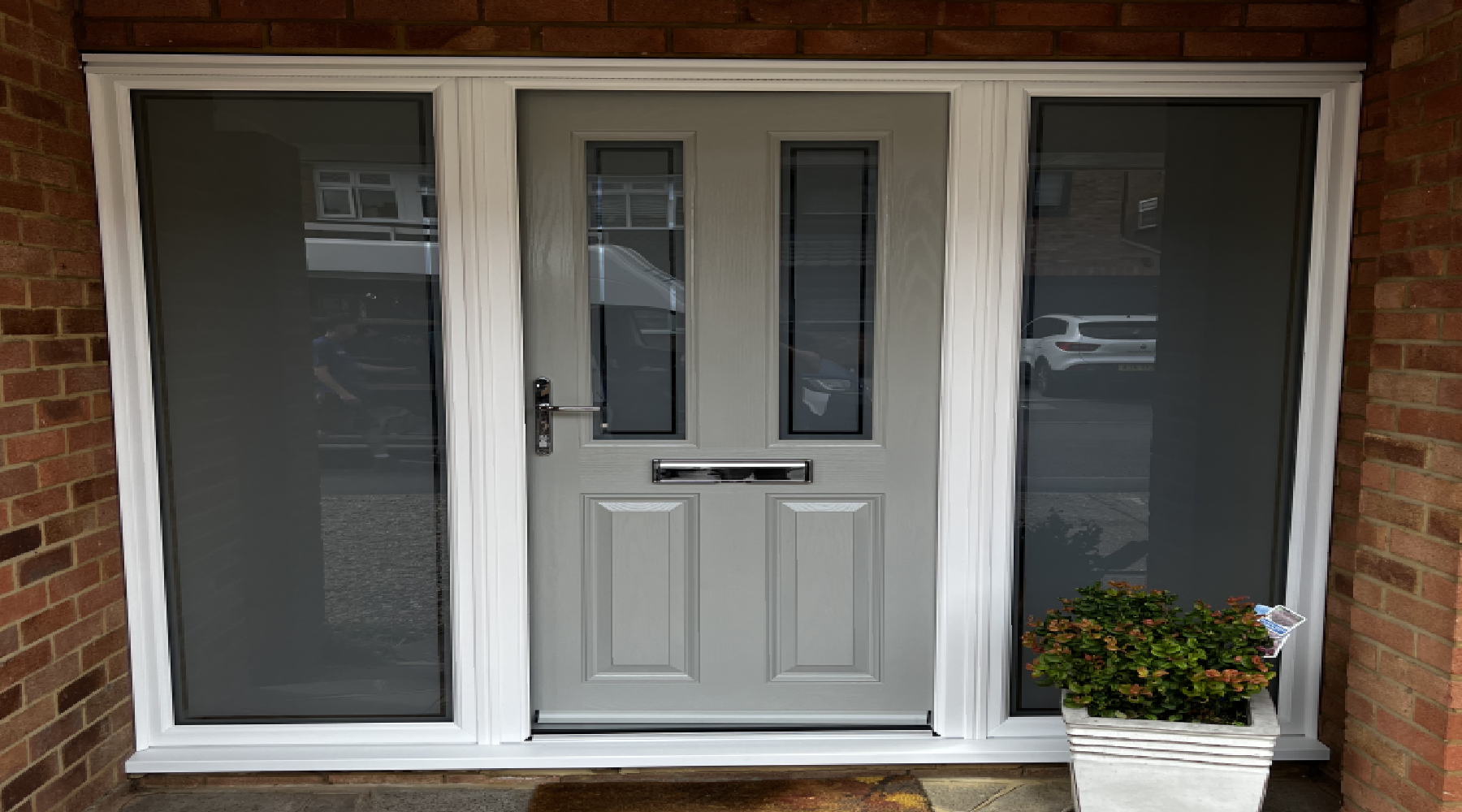
A growing number of clients request palladio composite doors installation, which are known for:
- Deeper profiles (often ~70mm thick)
- More authentic timber-style appearance
- High-density core for improved security
These are particularly popular in premium refurbishments and high-value rental properties.
Security Performance: What You’re Really Getting
Security is often the primary driver behind composite front door installation.
Key Features:
- Multi-point locking systems
- Anti-snap, anti-bump cylinders
- Reinforced steel or timber cores
- Impact-resistant outer skins
UK Standards to Look For:
- PAS 24 certification
- Secured by Design accreditation
Real-world observation:
In older uPVC doors, we frequently find worn hinges or misaligned locks after 8-10 years. Composite doors, by contrast, retain alignment and locking performance far longer when properly installed.
Compliance and Legal Considerations in the UK
Installing a new front door isn’t just about aesthetics-it must comply with UK regulations.
Building Regulations (England & Wales)
Your installation must meet:
- Thermal efficiency standards (Part L)
- Safety glazing where applicable
- Proper ventilation considerations
FENSA Certification
If installed by a FENSA-registered installer, you receive:
- Certification for compliance
- No need for separate Building Control approval
EPC (Energy Performance Certificate)
A properly fitted composite door can:
- Improve your EPC rating
- Reduce heat loss through the entrance
Important distinction:
- Legal compliance: Certification, thermal standards, safety glazing
- Strategic decision: Choosing door type, glazing, and security level
Installation Process: What Actually Happens On Site
Many homeowners underestimate what goes into a proper Composite Doors installation.
Step-by-Step Overview:
- Initial Survey
- Accurate measurement (critical for airtight fit)
- Assessment of frame condition and lintel support
- Door Specification
- Style, glazing, colour, hardware selection
- Removal of Existing Door
- Careful extraction to avoid structural damage
- Frame Preparation
- Levelling and sealing surfaces
- Installation & Fixing
- Mechanical fixing (not just foam)
- Alignment for smooth operation
- Sealing & Finishing
- Weatherproof seals
- Internal trims and making good
Typical Timeframe:
- Standard install: 3-5 hours
- Complex installs (older properties): 1 full day
Common Installation Challenges in UK Homes
Based on decades of field experience, here are the most frequent issues:
1. Uneven Openings in Older Properties
- Particularly in Victorian homes
- Requires packing and frame adjustment
2. Damp or Rot Around Existing Frames
- Must be addressed before installation
- Otherwise compromises longevity
3. Access Limitations
- Flats or tight entrances may require smaller sections or additional labour
4. Weather Delays
- Heavy rain can affect sealing and finishing
Installer tip:
Never rush installation in poor weather-this is where long-term issues begin.
Composite vs uPVC vs Timber Doors
| Feature | Composite Door | uPVC Door | Timber Door |
|---|---|---|---|
| Security | Excellent | Moderate | Good (depends on quality) |
| Thermal Efficiency | High | Moderate | Variable |
| Maintenance | Low | Low | High |
| Lifespan | 25-30 years | 15-20 years | 20-40 years |
| Weather Resistance | Excellent | Good | Moderate |
| Cost | Mid-High | Low-Mid | High |
Conclusion:
Composite doors offer the best balance of performance and maintenance for most UK homeowners.
Hertfordshire Semi-Detached Home
A recent project involved a 1930s semi-detached property where the original timber door had:
- Warped due to moisture
- Significant draught issues
- Outdated locking system
Solution:
- Installed a palladio composite door
- Upgraded to multi-point locking system
- Added decorative double-glazed panel
Results:
- Noticeable reduction in draughts
- Improved EPC rating
- Enhanced kerb appeal
The homeowner specifically noted reduced street noise-an often overlooked benefit of composite construction.
Checklist Before You Install
Use this checklist when planning your composite front door installation:
Pre-Installation:
- Confirm installer is FENSA-registered
- Check door meets PAS 24 standards
- Choose glazing compliant with safety regulations
During Survey:
- Ensure precise measurements
- Discuss threshold options (important for accessibility)
- Assess surrounding brickwork condition
After Installation:
- Receive certification
- Check operation (locks, hinges, seals)
- Confirm warranty details
Strategic Decision-Making: Getting Long-Term Value
Choosing a composite door is not just about replacing an entry point-it’s about improving property performance.
Consider:
- Security needs: Urban vs rural properties
- Thermal efficiency: Older homes benefit most
- Aesthetic fit: Match property style
- Rental value: Stronger appeal for tenants
For landlords and developers, composite doors are particularly valuable due to:
- Low maintenance requirements
- Reduced call-outs for repairs
- Long service life
Subtle Upgrade, Significant Impact
In practical terms, a well-installed composite door delivers:
- Immediate visual upgrade
- Measurable energy efficiency improvement
- Long-term reliability
From a professional standpoint, it’s one of the few upgrades that ticks both functional and aesthetic boxes simultaneously.
Why Work with an Experienced Installer
A high-quality door is only as good as its installation.
At Design A View, we bring:
- 30+ years of hands-on UK installation experience
- Full compliance with Building Regulations
- FENSA-certified installations
- Property-specific recommendations
The difference lies in the details-accurate surveying, correct fitting, and long-term performance.
FAQs: Composite Doors Installation in the UK
Most installations are completed within 3-5 hours. Older properties or structural issues may extend this to a full day.
In most cases, no. However, properties in conservation areas or listed buildings may require approval.
Yes. Composite doors typically include reinforced cores and advanced locking systems that exceed standard uPVC security
Yes, particularly if replacing an older timber or poorly insulated door. Improved thermal efficiency can positively impact EPC scores.
With proper installation and minimal maintenance, composite doors can last 25-30 years or more.